Instagram

Retirar el pañal: guía respetuosa para padres primerizos
El control de esfínteres no es una carrera contra reloj. Es un hito madurativo que combina dos piezas inseparables: el aprendizaje, es decir, comprender qué es la eliminación, cómo y dónde se hace; y la maduración fisiológica, ser capaz de controlar los músculos voluntariamente. Ninguna de las dos se puede forzar con un calendario, porque el sistema cerebral madura a su propio ritmo.
Around the year and a half, children can already retain urine and stool, but retaining is not the same as controlling. Controlling means deciding on purpose when to open or close those sphincters, and that voluntary decision comes much later. Between two and four years, most kids achieve it, but the margins are enormous.
| Edad | % que controla esfínteres |
|---|---|
| 30 meses (2 años y medio) | 50% |
| 3 años | 75% |
| 3 años y medio | 95% |
These figures explain why a child entering school at two and a half might still need diapers without any problem. So before jumping into the withdrawal, the key question is: is my child actually ready?
Readiness isn't just about age. It depends on physical, cognitive, behavioral and emotional capacities. At the physical level, look for: running and walking with balance, jumping with both feet, going up and down stairs (even with help), pulling pants down independently, and keeping the diaper dry for several hours.
- Lenguaje: understands simple instructions, recognizes everyday objects and body parts, and communicates (verbally or with signals) that the diaper is wet and wants it off.
- Comportamiento: shows interest in going to the bathroom and follows simple orders.
- Emocional: is in a calm period, without simultaneous big changes like starting nursery school, weaning, removing the pacifier, a new sibling, or an intense tantrum phase.
The learning begins long before removing the diaper. From the moment the child walks, involve them in every diaper change: explain what you're doing, name the genitals by their real names, let them help pull down clothes, grab the wipe, clean themselves a bit. That early involvement builds the foundation for future control.
Stimulation strategies work well from about 18 months: play with dolls, sitting them on a little potty; use bath toys that squirt water when squeezed; and manipulative play with clay, playdough, finger paint to get familiar with bodily sensations. Early sex education, explaining whether they have a penis or a vulva, what it's for, how pee and poop work, normalizes the topic and strips it of any shame.
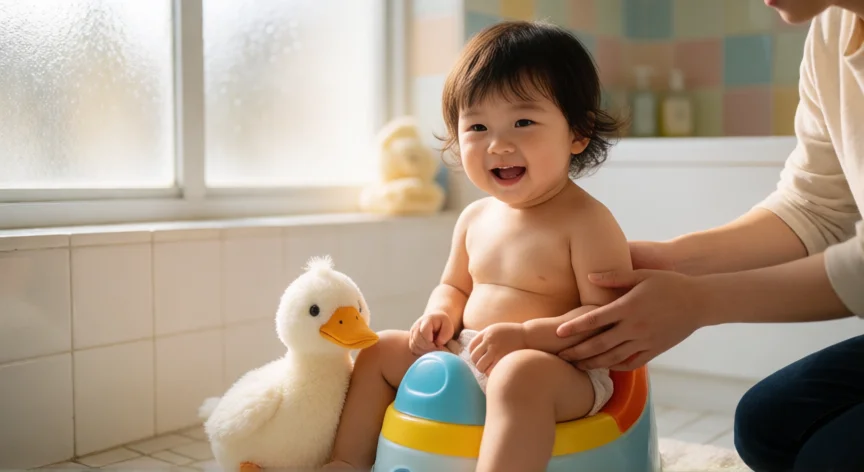
The classic potty familiarization technique is very effective: place the potty in a visible, convenient spot, present it as their 'special and wonderful' potty. Let the child sit on it fully dressed for five minutes, twice a day, for a week, choosing the moment they're most likely to have a bowel movement (after meals, for instance). Never force them to sit there. The potty gradually moves toward the bathroom.
“Las regresiones nocturnas afectan hasta al 80% de los niños. No es un retroceso, es parte del proceso.”
Dato clave